




Understanding Sleep Cycles: Achieving a Good Night’s Sleep
Understanding your sleep cycles is key to achieving quality rest. From REM to deep sleep, knowing how your body restores itself can improve health, focus, and mood.
Key Takeaways
- Sleep cycles alternate between light, deep, and REM stages, each vital for restoration and memory.
- Good sleep hygiene—like consistent routines and a restful environment—supports better quality sleep.
- Disrupted sleep or deficiency increases risks for mood issues, chronic health conditions, and fatigue.
The Importance of Sleep
Sleep is a bodily process that allows your brain and body to rest.1 However, if you’re not getting enough sleep, or enough quality sleep, your body and brain don’t function as well as they ought to.1
What Happens When You Sleep?
While you’re sleeping, your body and brain are in a state of rest – like when you power down a computer. During this downtime while you’re asleep, your body is able to do some amazing things:1,2
- Your body works to repair itself. Your heart rate slows during sleep, allowing cardiovascular health to improve. While you’re sleeping, the body produces more cytokines, hormones that assist the immune system in fighting off infections.
- Your hormones are at work. Growth hormones are released in your sleep, which trigger growth in children and an increase of muscle mass and cellular repair in adults. During sleep, your body creates and releases hormones that assist the immune system and control how your body uses energy.
- Your body conserves energy. While you’re sleeping, your body uses less energy to maintain itself and stores any residual energy for the following day.
- Your brain sorts information. Your brain forms or strengthens the pathways between cells that are needed to perform certain tasks while you’re asleep, and recognizes and sorts learned information so you can recall it more efficiently.
How Much Sleep Do I Need?
The National Sleep Foundation recommends that adults between 18 and 64 years old get seven to nine hours of sleep at night.3 Adults older than 65 years old may need slightly less.3 And when given the opportunity to have as much sleep as they want or need, healthy adults may average between eight and eight and a half hours a night.2
However, this isn’t universal: sleep needs vary from person to person.1,2 The trait of being a “short sleeper” can be inherited from a parent!1
Recommended amounts of sleep for other age groups include:1,2
Age |
Amount of sleep needed |
Newborn |
14-18 hours a day |
Preschool-aged children |
10-14 hours a day |
School-aged children |
9-12 |
Teenagers |
8-10 |
What if I Don’t Get Enough Sleep?
More than 33% of adults questioned for the National Sleep Foundation’s 2020 Sleep in America Poll aren’t getting enough sleep, and feel sleepy during the day at least half the week or more.3 This lack of sleep can affect:3
- Mood
- Productivity
- Mental sharpness
What’s more, feeling tired and sleep deprived—a condition that results from not getting enough sleep—can impact personal relationships, ability to exercise, and performance at work.3 Sleep deprivation is different than sleep deficiency.4
What is Sleep Deficiency?
Sleep deficiency is a little different than sleep deprivation.4 Where sleep deprivation is a condition that results from not getting enough sleep, sleep deficiency can mean that not only are you not sleeping enough, you aren’t getting enough quality sleep.4
Being sleep deficient can make you feel frustrated, cranky, and worried in social situations, it can also lead to difficulty judging people’s emotions and reactions.4 Apart from immediate interpersonal concerns, sleep deficiency is linked to chronic health problems like:4
- Heart disease
- Kidney disease
- High blood pressure
- Diabetes
- Stroke
- Obesity
- Depression
Not getting enough sleep and not sleeping well is linked to an increased chance of injury across age groups.4 This could mean falls and broken bones or getting in a car accident because you’re too sleepy to pay enough attention.4 The answer is clear: sleep deficiency is detrimental to your mental, physical and emotional health. This means you’ll need to take certain steps to ensure that you’re getting a good night’s sleep.
Sleep Hygiene: Creating a Nighttime Routine
Sleep hygiene is a set of routines and practices that help you get good quality sleep that allows your body the physical maintenance, immune system boost and cognitive and emotional reset that a good night’s sleep can provide.5
Sleep hygiene involves:5
- A comfortable sleep environment that’s conducive to uninterrupted sleep
- Following a bedtime routine that helps you fall asleep
- Establishing daytime habits that work toward a restful night’s sleep
- Keeping a consistent sleep schedule
Putting Sleep Hygiene into Practice
You spend about a third of your life asleep, so it’s wise to take steps to set yourself up for success at bedtime:1,2,3,5
Tip for Sound Sleep |
Putting It In Action |
|
|
|
|
Create a relaxing bedtime routine |
|
Another way you can set yourself up for success is to consider your circadian rhythm.
What is a Circadian Rhythm?
Circadian rhythms are the physical, mental and behavioral changes that you experience over a 24-hour cycle that’s attuned to the daily cycle of day and night.6
An average teenager may experience a circadian cycle like this:6
- 10am – 1pm: Energy and alertness increase thanks to the body temperature rising throughout the morning
- 2pm – 5pm: The afternoon slump hits, a teen may feel sleepy or hungry.
- 11pm: A teen may begin to feel sleepy thanks to the appearance of melatonin, the sleep hormone, which appears later in the day for teens than for older adults.
- 3am – 7am: This is when a teen’s energy may be at its lowest; depending on their internal clock, they may not feel fully awake until 9 or 10am.
While the specific may vary from person to person, the biological clock will typically make you the most alert during daylight hours and the least alert during early morning hours.2 Taking some time to understand your own circadian rhythm can help you practice good sleep hygiene.
Can a Circadian Rhythm Get Disrupted?
A circadian rhythm can fall out of sync with the daily cycle of night and day due to environmental causes or factors in the human body:2,6
- Certain gene variants can affect a biological clock
- Neurological diseases like Alzheimer’s can disrupt this natural rhythm, leading to poor sleep quality
- Jet lag can affect a normal sleep-wake cycle
- Blue light from electronic devices can confuse biological clocks
- Working at night
What’s the Connection Between Melatonin and Sleep?
Melatonin is a hormone that your body naturally produces to make you feel sleepy at night.2 It’s an integral part of your circadian rhythm: your biological clock triggers your body to produce melatonin, which makes you feel increasingly sleepy.2
What is a Sleep Cycle?
The circadian rhythm is your body’s cycle of being asleep and being awake; the sleep cycle is the way that you cycle through the distinct stages of sleep—rapid eye movement and nonrapid eye movement—during the night.1,7 Understanding the sleep cycle, sometimes known as a REM cycle, can help you understand why you are or aren’t feeling particularly rested in the mornings.
How Long is a Sleep Cycle?
Over the course of a night, your body may cycle through the stages of sleep every 90 to 120 minutes.1 People will commonly go through 4-5 cycles over the course of a night, assuming they get a full 8 hours of sleep.1
Sleep Cycle Stages
There are four stages in each sleep cycle; the first three are categorized as non-REM sleep and the fourth and final stage of your sleep cycle is Rapid Eye Movement (REM) sleep.7
The sleep cycle stages are:1,2,7
- Stage 1 is the lightest phase of sleep and generally a few minutes. Since this occurs immediately after someone falls asleep, the sleeper may wake up easily during this stage. The brain produces alpha and theta waves during this stage, and the heart rate begins to slow and the muscles relax.
- Stage 2 is still considered to be light sleep, but it’s a deeper sleep than stage 1. The body begins to relax more deeply and brain waves slow down, though they still produce bursts of powerful electrical activity. This stage of sleep accounts for about 45% of your time asleep.
- Stage 3 is considered deep sleep; it can be difficult to wake someone during this stage. Deep sleep is considered a restorative stage of sleep that’s necessary for feeling well-rested during the day. Your body uses this stage to reinforce your immune system and help to repair any injuries.
- Stage 4 is referred to as rapid eye movement (REM) sleep, which is so-named because when you’re dreaming, your eyes move rapidly behind your eyelids. During REM sleep, your breathing becomes rapid, shallow and your heart rate becomes irregular. REM sleep is critical for learning, memory, mood and being able to concentrate while you’re awake.
How Long Does REM Sleep Last?
Each time you cycle through your sleep stages, the amount of time you spend in each stage may differ slightly. REM sleep makes up about 25% of your total time asleep, with the first time you experience it being on the shorter side, about 10 minutes.1 Subsequent times in REM sleep may be longer than the previous ones, sometimes lasting up to an hour!1
Deep Sleep vs. REM: What Do We Need More?
Deep sleep and REM sleep are both necessary for your mental and physical well-being. Here’s how these stages of sleep differ:1,2,7
Deep Sleep |
REM Sleep |
Restorative, stage |
Dreaming stage |
Body uses this stage to repair muscle and tissue, improve immune function and encourages physical growth and development |
Brain uses this stage for learning, memory, daytime concentration and overall mood |
Brain activity is slowed and characterized by slow Delta waves |
Brain activity appears similar to activity while you’re awake |
Each time you enter deep sleep, it becomes a little shorter |
Each time you enter REM sleep, it becomes a little longer |
How Can I Make Sure I Get a Good Night’s Sleep?
Understanding the importance of sleep and what contributes to restful sleep can make a huge difference in the choices you make day to day. Refer to these tips to try and improve your overall sleep quality:1,2,3,4,5,6,7
- Keep a regular bedtime routine
- Avoid blue light from electronic devices – this can interfere with your body’s production of melatonin
- Practice good sleep hygiene
- Pay attention to your own circadian rhythm; notice when you’re most awake and when you’re feeling sleepy
When Pain Disrupts Sleep
There are lots of things that may keep you from achieving the deep, restorative sleep you’re seeking – pain at night may be one of them. There are a range of conditions that are linked to the chronic pain that may keep you up at night:8
- Age-related bodily wear and tear
- Lower back pain, especially sciatica
- Migraines
- Nerve disorders
Pain can have an enormous impact on sleep duration and quality, and sleep disturbances can make pain worse.8 Research has indicated that when we don’t get enough good quality sleep, we’re more likely to develop chronic pain.8
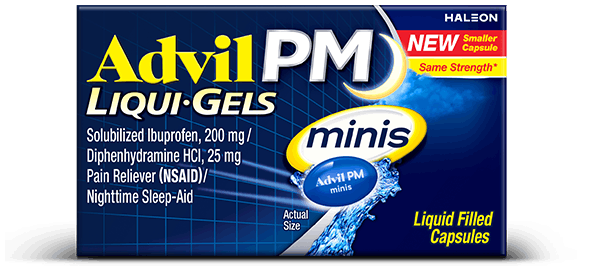
If pain is keeping you up at night, talk to your healthcare provider about melatonin-free Advil PM. Get the healing sleep you need with the help of Advil PM Liqui-Gel Minis, now in a smaller, easy-to-swallow capsule!
Prioritize Rest for Better Health
Getting enough quality sleep is not just about quantity, it’s about balance between deep sleep, REM cycles, and healthy routines. By practicing strong sleep hygiene and paying attention to your circadian rhythm, you can set the foundation for better health, sharper focus, and more energy each day.
SOURCES
- Sleep. Cleveland Clinic. https://my.clevelandclinic.org/health/body/12148-sleep-basics. Accessed 9/3/25.
- Your Guide to Healthy Sleep. National Heart, Lunng, and Blood Institute. https://www.nhlbi.nih.gov/sites/default/files/publications/11-5271.pdf. Accessed 9/3/25.
- Interesting Sleep Facts & Statistics that We Can Learn From. National Sleep Foundation. https://www.thensf.org/sleep-facts-and-statistics/. Accessed 9/3/25.
- What Are Sleep Deprivation and Deficiency? National Heart, Lung, and Blood Institute. https://www.nhlbi.nih.gov/health/sleep-deprivation. Accessed 9/4/25.
- Sleep hygiene: Simple practices for better rest. Harvard Health Publishing. https://www.health.harvard.edu/staying-healthy/sleep-hygiene-simple-practices-for-better-rest. Accessed 9/4/25.
- Circadian Rhythms. National Institute of General Medical Sciences. https://www.nigms.nih.gov/education/fact-sheets/Pages/circadian-rhythms. Accessed 9/4/25.
- What are the Sleep Stages? National Sleep Foundation. https://www.thensf.org/what-are-the-sleep-stages/. Accessed 9/4/25.
- Managing Chronic Pain and Sleep. National Council on Aging. https://www.ncoa.org/article/managing-chronic-pain-and-sleep/. Accessed 9/4/25.
By clicking the link(s) above, you will be taken to an external website that is independently operated and not managed by Haleon. Haleon assumes no responsibility for the content on the website. If you do not wish to leave this website, do not click on the links above.


